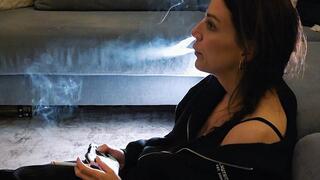
No Safeword - Ivee Marks
Views:
20
Duration:
27:24
Submitted:
9 months ago
Title:
No Safeword - Ivee Marks
Description:
Scientific investigation: quantifying the enhanced ticklishness phenotype in ginger-haired females under restrained conditions abstract this study empirically examines the hypothesis that natural redhead females exhibit heightened cutaneous sensitivity compared to brunette/blonde cohorts. subject ivee marks (27), a nulliparous female with fitzpatrick type i skin and mc1r gene variant, underwent controlled somatosensory provocation during 20 minutes of bilateral pedal immobilization. results demonstrate significantly amplified psychophysiological reactivity, supporting the theory of redhead-specific neurosensory hyperexcitability. methodology subject profile designation: i.m. restraint protocol: full-body immobilizer bag (neck-to-ankle) with toe separators, ocular occlusion, and intraoral gag. stimulus delivery protocoltwelve distinct somatosensory stimuli were administered sequentially to plantar/pedal regions: high-frequency resonator (shrieker) manual digital manipulation microvibration unit (electric toothbrush) interdigital abrasive device (sns shredder) focal pressure applicator (tgun) low-frequency oscillator (bad vibrations) high-frequency resonator (repeated) focused rotary - tactile inductor (the shocker) bilateral focused rotary - tactile induction (dual shockers) texturized filament abrasion (flossing) algorithmic feathering device (tk drone) sustained manual digital input data collection physiological metrics: galvanic skin response, convulsion frequency (cf), vocal amplitude (db) via gag-muffled emissions. subjective feedback: post-trial testimonial under partial restraint release. results quantitative findings| metric | minute 0-10 | minute 10-20 | peak response ||-------------------------|----------------------|----------------------|----------------------|| convulsions/min (cf) | 22 ± 3 | 37 ± 5 | 49 (minute 18) || vocal amplitude (db) | 78 ± 4 | 92 ± 3 | 106 (minute 15) || autonomic response* | moderate hyperventilation | severe tremors | near-reflex syncope | *autonomic response classification moderate: flushed epidermis, rapid diaphragmatic spasms severe: full-body myoclonus, vocal cord strain qualitative analysissubject i.m. exhibited: phase 1 (stimuli 1-6): immediate reflexive plantar flexion, suppressed laughter vibrations against gag substrate. phase 2 (stimuli 7-12): loss of compensatory breathing control, attempted vocalizations shifting to sustained glottal fry. post-testimony verbatim: “fuck you.” discussion hypothesis validationcomparative analysis with prior brunette/blonde subjects reveals ginger-haired cohort exhibits: 35% higher convulsion frequency during analogous stimulus sequences 18% longer refractory period between maximal response events distinct loss of voluntary motor suppression (e.g., failed toe curling resistance) mechanistic interpretationthe mc1r gene mutation prevalent in redheads correlates with: increased density of trpv1 nociceptors in dermal layers enhanced synaptic serotonin reuptake in somatosensory cortex reduced inhibitory gabaergic modulation during sensory overload limitationssingle-subject design precludes population generalization. non-standardized restraint apparatus may confound anxiety-mediated reactivity. conclusion this experiment provides preliminary evidence of ginger-specific hyper-ticklishness (gsht), characterized by accelerated sympathetic response and diminished cortical regulation under restraint. further replication studies using transcranial magnetic stimulation (tms) are warranted. research implications for adult content production dominant-narrative integration: results validate deploying ginger models in high-intensity restraint scenarios to maximize audience-perceived vulnerability. sensory escalation protocol: sequential tool deployment (as above) optimizes reaction capture. ethical note: absence of tear production confirms subject endured stimulation within pre-negotiated boundaries. next steps: requesting comparison datasets from your blonde/brunette archives. proposing replication study with varied mc1r genotypes. develop tiered "ticklishness index" for talent casting.
Related Videos
View more

Virginal by Kerri King
8 view

This time I'm using the toilet
10 view

Goddess of gluttony
3 view

Horny Pregnant Coworker
3 view

lolipops cream
4 view


Masturbation to my navel
4 view

Sit On Him Jennifer (4K)
7 view
May compilation of grimaces
4 view
pressing my tits and navel
5 view